By Chris Carpenter
Sarasota has something that design-conscious homeowners travel across the country to find: natural light that arrives early, lingers all day, and paints the walls in a warmth that no lamp can replicate. With plentiful sunny days and a Gulf Coast setting that reflects light off the water and into your rooms, Sarasota is one of the best places in the country to design a home around the sun. The question is whether your home is actually capturing all of that light or inadvertently working against it.
Designing for natural light is not simply about adding windows. It is a layered approach that considers the orientation of the home, the depth of the floor plan, the finishes on every surface, and the way that the architectural details interact with the sunlight as it moves across the sky. When done well, a light-filled Sarasota home feels larger, healthier, and more connected to the great outdoors. Done poorly, even a home with plenty of windows can feel dim, glaring, or hot.
Whether you are building new, renovating, or simply reconsidering the way you have styled your current home, understanding how to design for natural light in Sarasota's specific climate will change the way you experience your space.
Key Takeaways
- Sarasota's solar orientation means that south- and west-facing rooms require thoughtful shading strategies to maximize light without heat gain.
- Open floor plans, light-reflective finishes, and interior glass elements work together to push daylight deeper into your home.
- Window selection, including the type of glass and the size of the frame, has a significant impact on how much usable light enters your living spaces.
- Landscaping and exterior overhangs are powerful tools for filtering light seasonally and protecting the interiors from glare.
- The right design choices can help your home feel larger and more connected to Sarasota's outdoors without sacrificing comfort.
Understanding Sarasota's Solar Landscape
Before making any design decisions, it helps to understand how the sun actually moves through the day and what that means for your home. Florida sits at a lower latitude than much of the country, so the sun stays higher in the sky for longer, which means more direct light and more intense heat during peak hours. The Gulf Coast location also introduces reflected light from the water, which can brighten up interiors from unexpected angles.
South-facing rooms receive the most consistent daylight throughout the year, making them ideal for living areas, home offices, and spaces where you spend the majority of your time. North-facing rooms receive steady, indirect light that is ideal for art studios, reading rooms, or any space where you want even illumination without glare. East-facing rooms are bathed in cool morning light, which is perfect for bedrooms and breakfast spaces. West-facing rooms take the full force of the afternoon sun, so they require thoughtful shading to remain comfortable.
Understanding this orientation is the foundation of every other light-related decision you make. Rooms that work against solar patterns will always require more artificial lighting and more energy to cool. Rooms that work with the sun's path feel effortless and comfortable throughout the day.
Questions To Ask Before You Begin
- Which direction does your home face, and how does that affect each room?
- Are there rooms that feel perpetually dim despite having windows?
- Which areas of your home get uncomfortably bright or hot during peak afternoon hours?
- How do the trees, overhangs, or neighboring structures affect light at different times of year?
Windows, Glass, and the Architecture of Light
Windows are the primary interface between your interior and the natural light outside, and in Sarasota, selecting the right windows is one of the most impactful design decisions you can make. The size, placement, and glazing of your windows determine how much light enters, how much heat comes with it, and how comfortable the space feels throughout the day.
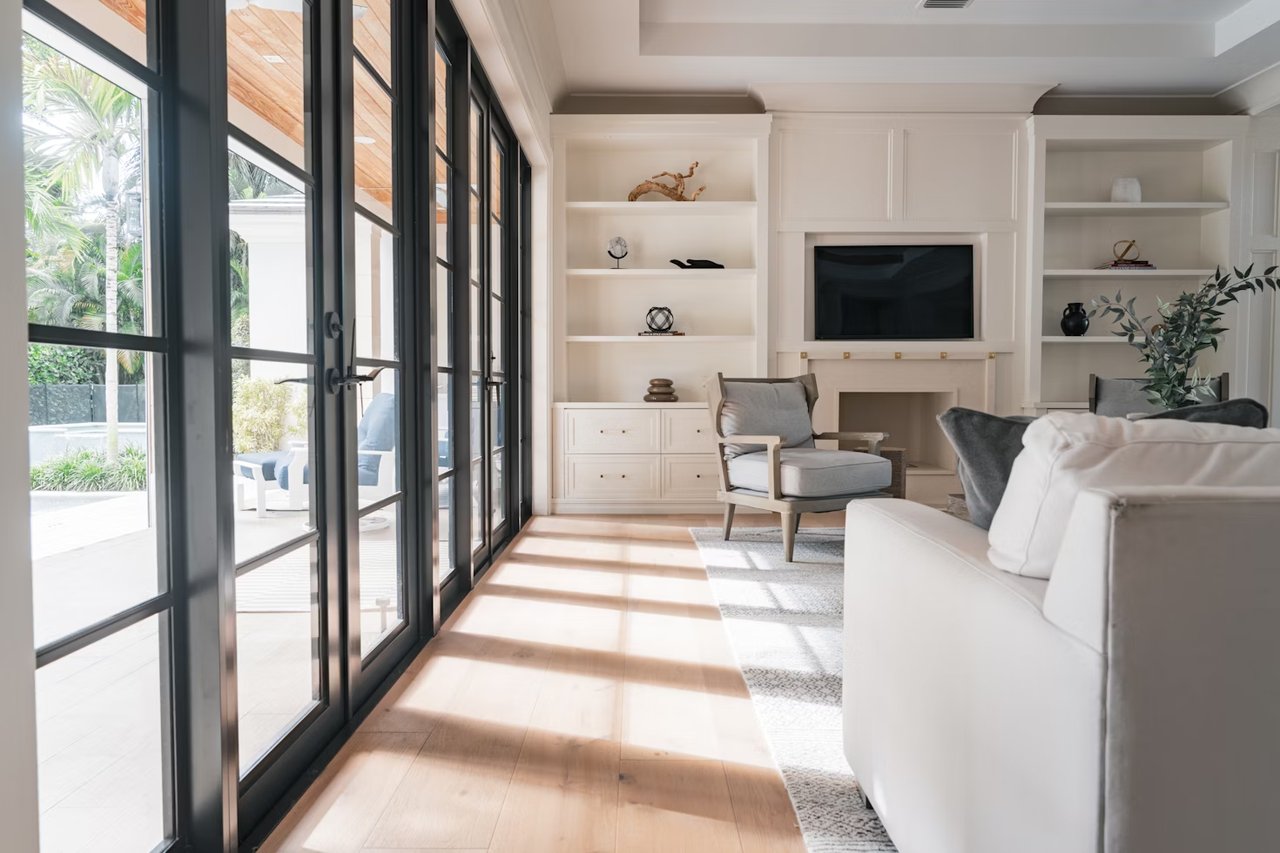
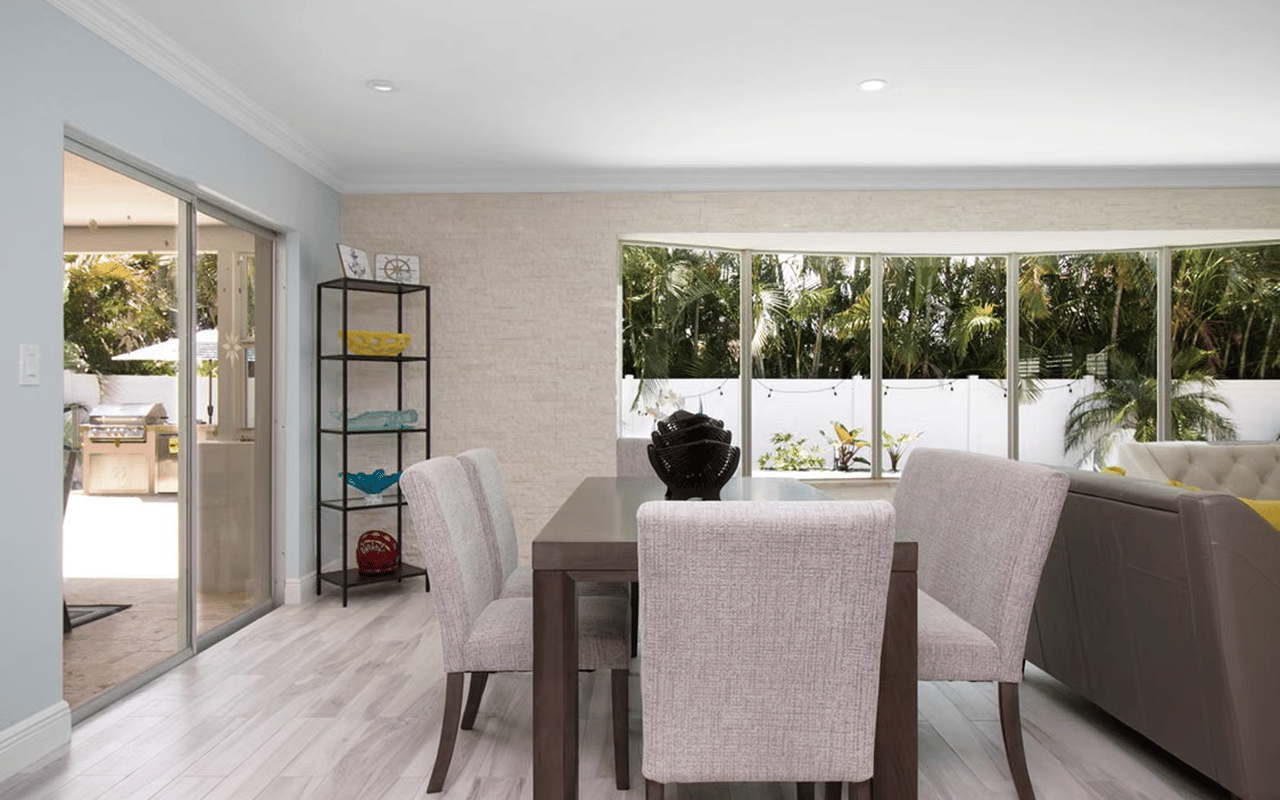
Floor-to-ceiling windows and sliding glass doors are among the most popular choices in Sarasota homes, and for good reason. They blur the boundary between indoors and outdoors — a relationship that is central to the Florida lifestyle and the architectural identity of this region. When positioned on the south or east faces of a home, they flood interiors with warm, useful light during the hours when you are most active.
Clerestory windows, which are placed high on the wall near the roofline, are a particularly effective tool in Sarasota's climate. Because they sit above eye level, they introduce light without creating glare at seated or standing height, and they take advantage of the high summer sun angle without the heat penalty of large west-facing panes. Skylights offer a similar benefit in rooms where adding wall windows is not possible.
Window Choices That Work in Sarasota
- Low-emissivity (low-e) glass lets the daylight through while reflecting heat-producing infrared radiation, which is essential in a climate with intense sun.
- Impact-rated windows, which are standard in coastal Florida construction, are available with solar-control glazing that manages heat gain without darkening the view.
- Casement windows offer full ventilation and can be positioned to capture Gulf breezes, reducing cooling demands during transitional seasons.
- Transom windows above interior doors carry borrowed light from room to room without sacrificing wall space.
Using Finishes and Surfaces to Amplify Natural Light
Once light enters your home, what it encounters on your walls, floors, and ceilings determines how far that light travels and how bright your space ultimately feels. This is where thoughtful interior design becomes as important as architectural decisions, and it’s where many homeowners leave significant opportunity untouched.
Light-colored walls are the most obvious lever, but the type of finish matters as much as the color. Matte white paint absorbs some light, while a satin or eggshell finish reflects it back into the room. Warm whites and off-whites tend to work better in Sarasota interiors than stark, cool whites, because they complement the golden quality of Gulf Coast light.
Flooring choices also carry significant impact. Light-toned hardwood, large-format porcelain tile, and polished concrete all reflect natural light upward, contributing to that open, airy quality that defines the best Sarasota homes. Dark flooring, while visually grounding, absorbs light and can make rooms feel smaller, so if you prefer a darker tone, balance it with lighter walls and generous artificial task lighting.
Mirrors, glass accents, and metallic fixtures function as secondary light distributors. A large mirror placed opposite a window can effectively double the perceived daylight in a room. Interior glass partitions, popular in contemporary Sarasota architecture, allow light to travel through the entire depth of a home without the walls that would otherwise stop it.
Surfaces That Maximize Light
- Satin or eggshell wall finishes reflect more light than flat matte paints and are easier to maintain in humid coastal climates.
- Large-format floor tiles in light travertine, limestone, or porcelain are a classic Sarasota choice that reflects light and reads as effortlessly refined.
- Glass-fronted cabinetry in kitchens and built-ins prevents visual heaviness and allows light to pass through rather than terminate at a solid surface.
- Glossy or lacquered ceiling treatments in smaller rooms can act as a soft reflector, adding perceived height and brightness.
Balancing Light and Shade in the Sarasota Climate
One of the design challenges in Sarasota is managing the line between beautiful natural light and uncomfortable heat or glare. The goal is not simply to let in as much light as possible; it is to let in the right quality of light at the right times. This is where exterior shading elements become some of the most valuable tools in your design.
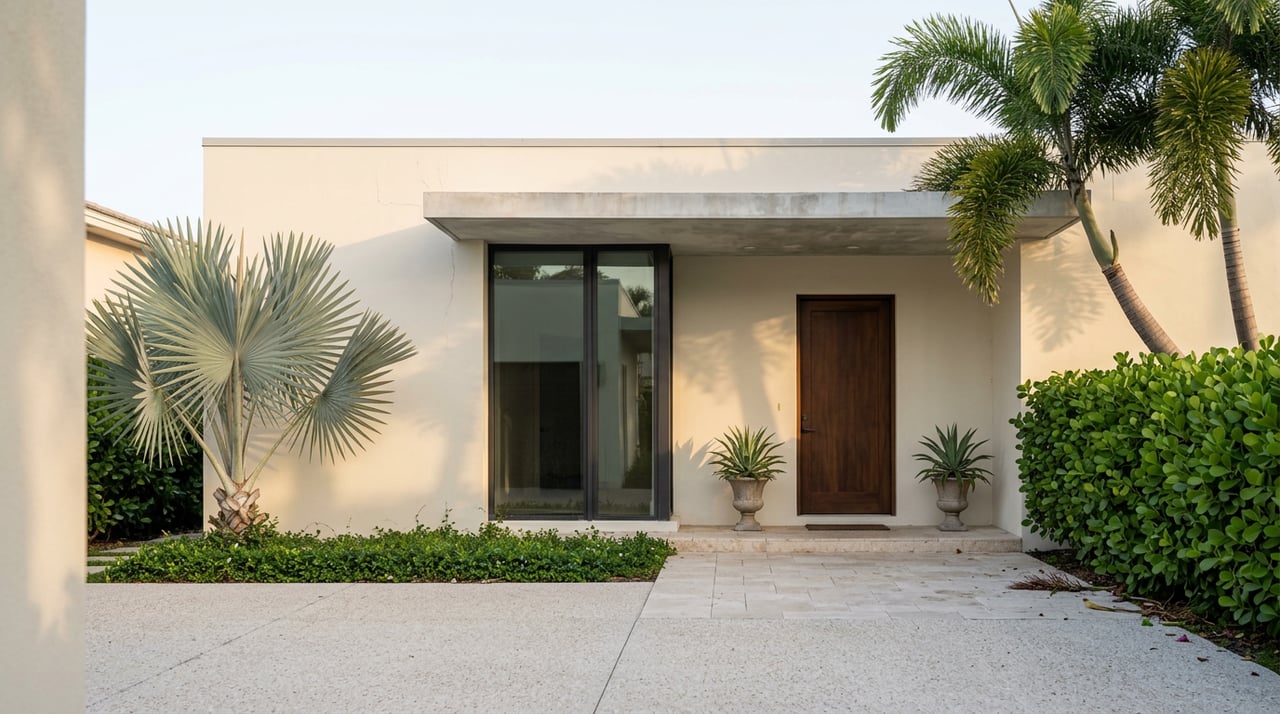
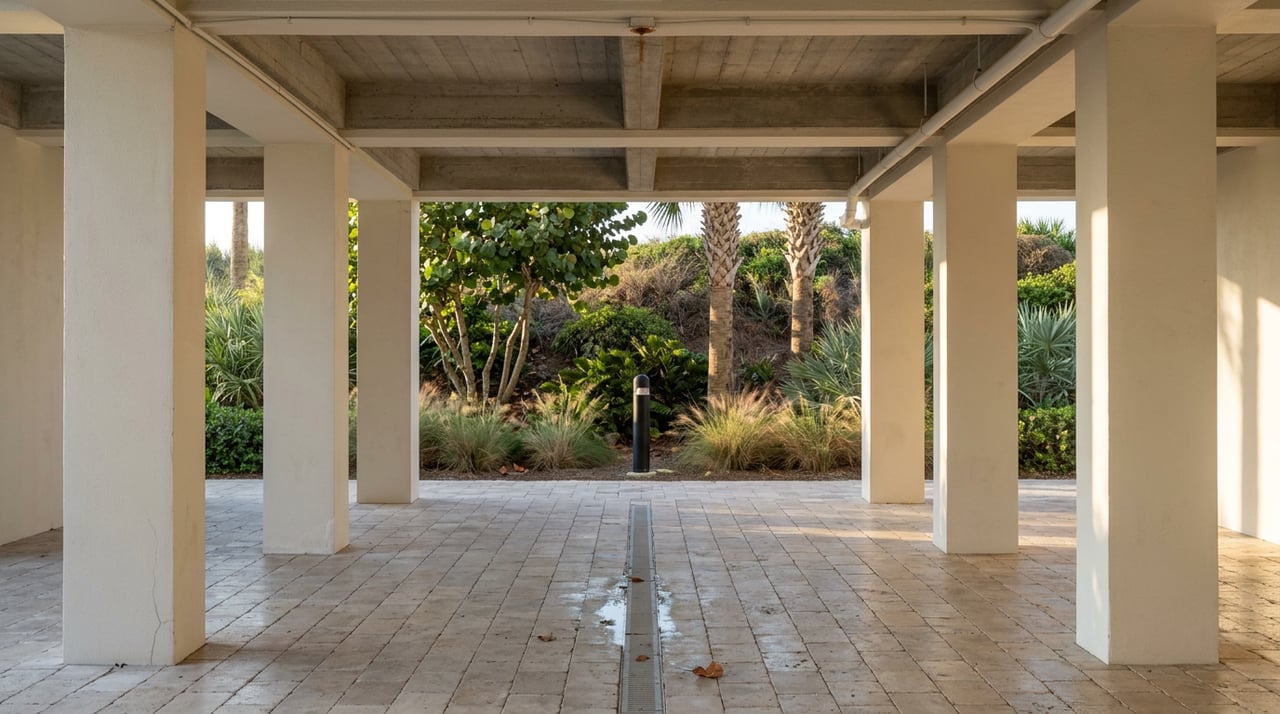
Deep roof overhangs are a hallmark of Florida vernacular architecture. A properly calculated overhang blocks the high summer sun from entering south-facing windows while allowing the lower winter sun to reach inside, essentially functioning as a passive solar control system that adjusts with the seasons. Covered lanais and screened porches serve a similar purpose, creating transitional zones of filtered, diffused light between the fully sunny outdoors and the interior.
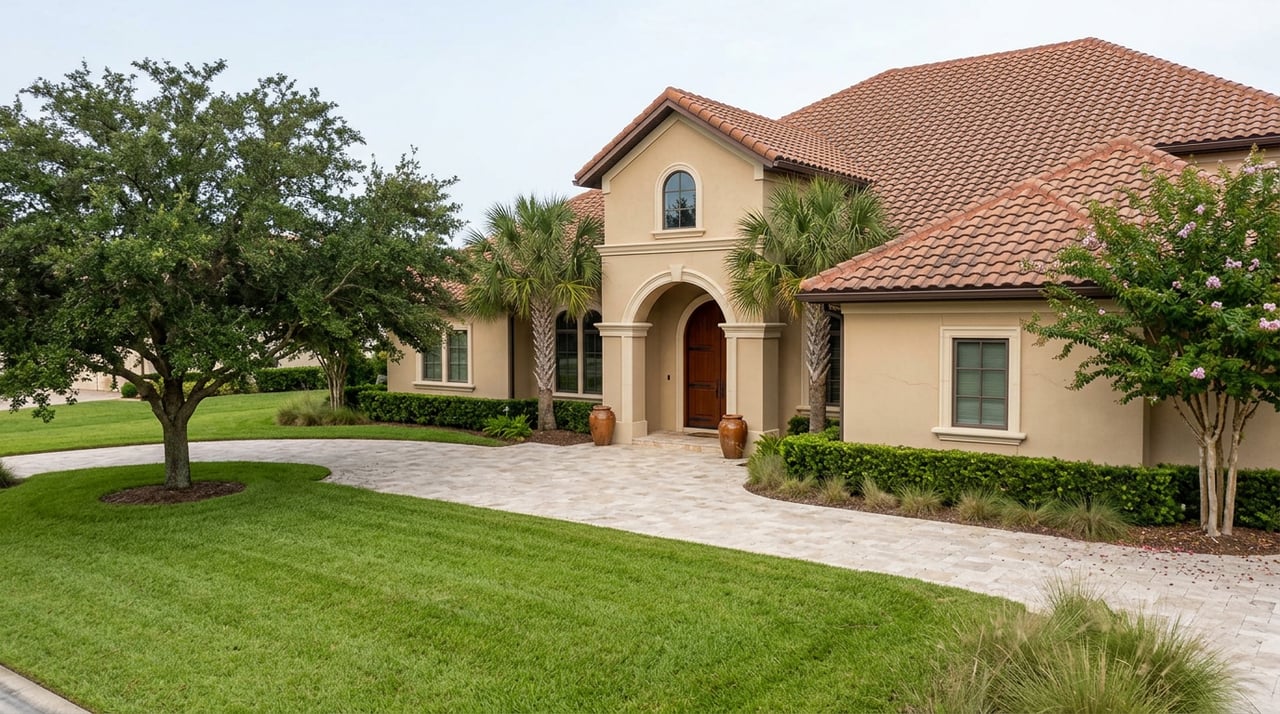
Landscape choices also play a larger role than many homeowners realize. Strategically placed palms and canopy trees can shade west-facing walls during the harsh afternoon hours without blocking the softer morning or southern light. In Sarasota's coastal neighborhoods, mature landscaping is one of the most effective shading strategies available.
Shading Strategies for Sarasota Homes
- Motorized exterior roller shades on west-facing windows allow you to filter afternoon glare without permanently obstructing the view.
- Adjustable louver shutters on covered outdoor spaces let you fine-tune light levels throughout the day.
- Solar shades on interior windows reduce UV exposure and heat gain while preserving natural light levels better than blackout or room-darkening options.
- Working with a landscape designer to position canopy trees on the west and southwest sides of the home provides long-term passive shading as the trees mature.
FAQs
How Does Sarasota's Climate Affect Natural Light?
Sarasota's combination of high solar intensity, coastal reflectivity, and a low latitude means that light management is a more active design concern than in northern cities. The design work is about channeling and filtering rather than maximizing. The reward is that homes designed well for Sarasota's light feel extraordinary for most of the year.
What Is the Best Window Placement for a Sarasota Home?
South-facing windows offer the most consistent year-round light with manageable heat gain. East-facing windows bring in pleasant morning light without the intensity of afternoon sun. West-facing windows require the most shading support. Clerestory windows and skylights are excellent additions in any orientation because they introduce overhead light that feels natural and reduces dependence on artificial lighting.
What Interior Design Choices Work Best in a Light-Filled Sarasota Home?
Light-toned, natural materials tend to work best: linen, rattan, whitewashed wood, stone, and soft organic textures. These materials absorb light in a way that feels warm and intentional rather than stark. Layered lighting with dimmable fixtures gives you flexibility as natural light shifts throughout the day, and keeping window treatments minimal or sheer preserves the connection to the great outdoors that makes Sarasota living so appealing.
Let Your Home Reflect What Sarasota Does Best
In Sarasota, the sun is extraordinary, and the homes that honor it are the ones that feel truly exceptional, regardless of their price point or square footage.
Whether you are considering a new build, a renovation downtown, or a thoughtful restyling of your current home, the principles of light-centered design apply at every scale. The right orientation, the right glazing, the right finishes, and the right shading strategy working together can transform a house into something that elevates how you live.
When you are ready to explore Sarasota homes designed with this kind of intention, or if you want to talk through what is possible in the market right now, reach out to me,
Chris Carpenter. I would be glad to guide you toward properties that capture everything this city's light has to offer.